


Cotswold Rhythm: An Abstract Dialogue Between Landscape, Memory and Painting
- Steve Roberts
- Jan 1
- 5 min read

I am interested in how the landscape influences us and seeps into other areas of our lives. How the memory of place and indeed the distortion of memory coupled with our own personal biases might shape our relationship with the environments we find ourselves in.
Landscape is not only “the countryside”. It includes the spaces we live in, travel through and return to—rural, urban and everything in between. The boundary between nature and the built environment is rarely defined. Hedgerows follow roads, footpaths cut through farmland, waterways pass under housing estates and wildlife adapts around industry. This blurring of boundaries matters because it reflects how we experience place: as a continually changing environment.
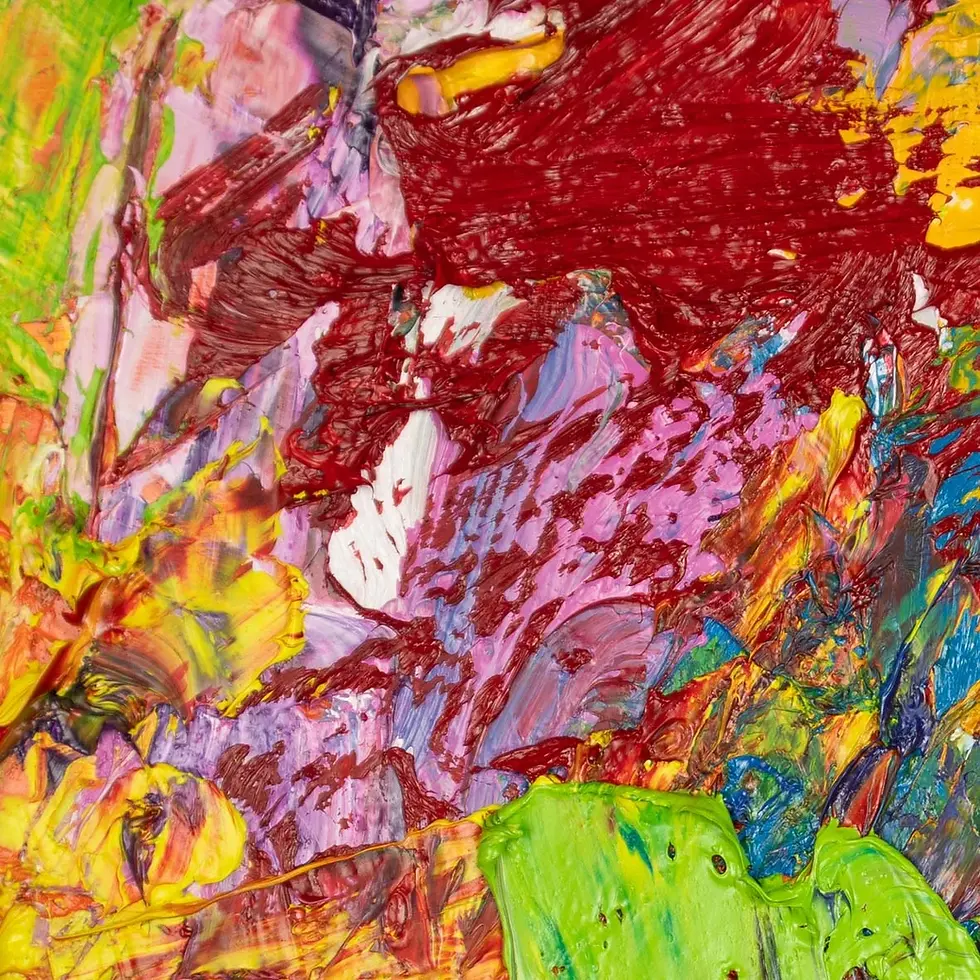
This is where Cotswold Rhythm begins. I’m interested in how landscape influences us—quietly and consistently—and how memory of place (including its distortions) shapes the way we experience the present. These paintings aren’t intended as direct depictions or recognisable forms. Instead, they explore how a place can stay active inside us, and how painting can become a living dialogue with that influence.

The Cotswolds: place as a long-term influence
My studio is near Cheltenham, Gloucestershire, and within a short walk I can be among fields and woodland—hearing wind through hedges, watching changing skies, and observing wildlife. I’ve lived in this area for around thirty years, and the Cotswold landscape has shaped my sense of home as well as my approach to making work.
As an abstract painter, I’m drawn to the Cotswolds for its constant variation. At first glance the landscape can feel settled—soft hills, familiar lanes, repeating shapes—but it is always shifting. Light changes minute to minute. Weather moves quickly. Colour relationships tilt with cloud cover, moisture, shadow and season. Cotswold Rhythm is my attempt to paint from that lived reality: not a singular perspective, but an experience of change felt within the body and carried into the studio.
Walking and the senses: how the work begins
A key part of this series is walking. Walking changes our thinking and the quality of our attention. It increases our awareness of: breath, rhythm, temperature, pressure, sound, movement, revealing that landscape is felt as much as it is seen. When you move through it, you notice scale and atmosphere—damp air in a shaded hollow, brightness on open ground, birds moving in hedgerows, the quiet hum of distance.
This shift matters to my practice. Walking brings me into a more receptive state where colour becomes more complex and less fixed. What looks “grey” at first can contain muted blues, violet shadows and warmer earth tones. The experience is already abstract: not one stable image, but a flow of impressions.
I often think of this as a two-way exchange. The body receives the environment through multiple senses, and we also project back into it—mood, expectation, memory, bias. The landscape exists independently, but our experience of it is made in real time, through presence.

From field to studio: working with fragments and memory
For Cotswold Rhythm, I’m undertaking a series of walks close to my studio. Some sessions will consist only of walking—letting the landscape settle the mind and heighten attention. Others include quick sketches and photographs made while moving through different parts of the Cotswolds.
I treat these outdoor sessions as discovery, not as a hunt for a “subject”. The intention is to notice what is there, without forcing a conclusion. Back in the studio, I lay out sketches and images as fragments of immersion—traces of colour, texture and atmosphere. I don’t use them as strict references. I’m more interested in what remains after the walk: how place sits in memory, and how that state of attention can be carried into paint.
Memory is never perfectly faithful. It compresses, exaggerates and sometimes replaces detail with feeling. In this series, that gap between experience and recollection is part of the work. The paintings are shaped by what was seen, what was felt, and what returns later—changed by time.

As I see it, our interaction with the landscape is essentially an abstract experience that is decoded by our myriad senses of perception. There is no form to this experience, no singular means to define it.
Abstraction as an unfolding process
Because landscape has no fixed edge, I want the paintings to remain open and responsive. I don’t plan compositions in advance. The structure is simple: consistent dimensions for each work and a shared palette across much of the series. Those constraints create continuity, while leaving the paintings free to evolve.
From there, the work develops through call and response. Each brushstroke shifts what the painting is becoming and changes the context of what’s already there. Sometimes a painting loses clarity and needs scraping back—removing hours of work. It can feel like a setback, but it often introduces new possibilities: broken surfaces, unexpected edges, rough textures and colour mixtures that open a different route forward.
This process is less about reaching a predetermined image and more about staying attentive to the painting as it unfolds. There is a balance between control and letting go—between intention and discovery—where the work “answers back” and I respond.
That’s where the link to walking returns. Outdoors, I can’t control light, weather or atmosphere—I can only meet what’s there. In the studio, the painting is also a changing environment. I can set conditions and begin, but the surface transforms and requires presence to be understood.

An ongoing dialogue: rhythm over time
Over the coming months, I intend for the paintings and outdoor sessions to feed into each other. I’m interested in what emerges when sketches and photographs sit in memory and begin to surface indirectly—without being forced into literal translation. The repeated movement between landscape and studio creates a rhythm: walking, noticing, returning, painting, reflecting, walking again. That rhythm is central to the series.
At its heart, Cotswold Rhythm asks wider questions:
How does environment shape perception and mood?
What does memory keep, lose or reinvent?
How can abstract painting hold the trace of lived experience without describing it?
Exhibition dates
Cotswold Rhythm is currently in development and is due to be released to coincide with the Cotswold Contemporaries group exhibition at Lower Slaughter Village Hall, running from 22–28 April, 2026. The exhibition will feature work by Colin Clark, Gerald Crittle and myself. More details will be shared in the coming months.
Lower Slaughter Village Hall
Colin Clark
Gerald Crittle

The continued process of moving between landscape and studio will create a rhythm which I hope will aid the development of these works leading to wider questions about how our environment influences our experience and how the distortion of memory can shape our present.
Follow the series Between now and the spring, I’ll be sharing the development of Cotswold Rhythm through blog posts, social media and video content to offer you a deeper insight into the context that drives the work, the creative process and my reflections on this experience. If you’d like to stay up to date with my progress and exhibition news, you can sign-up to my newsletter below. Newsletter Sign-Up: https://www.steverobertsart.co.uk/subscribe

Comments